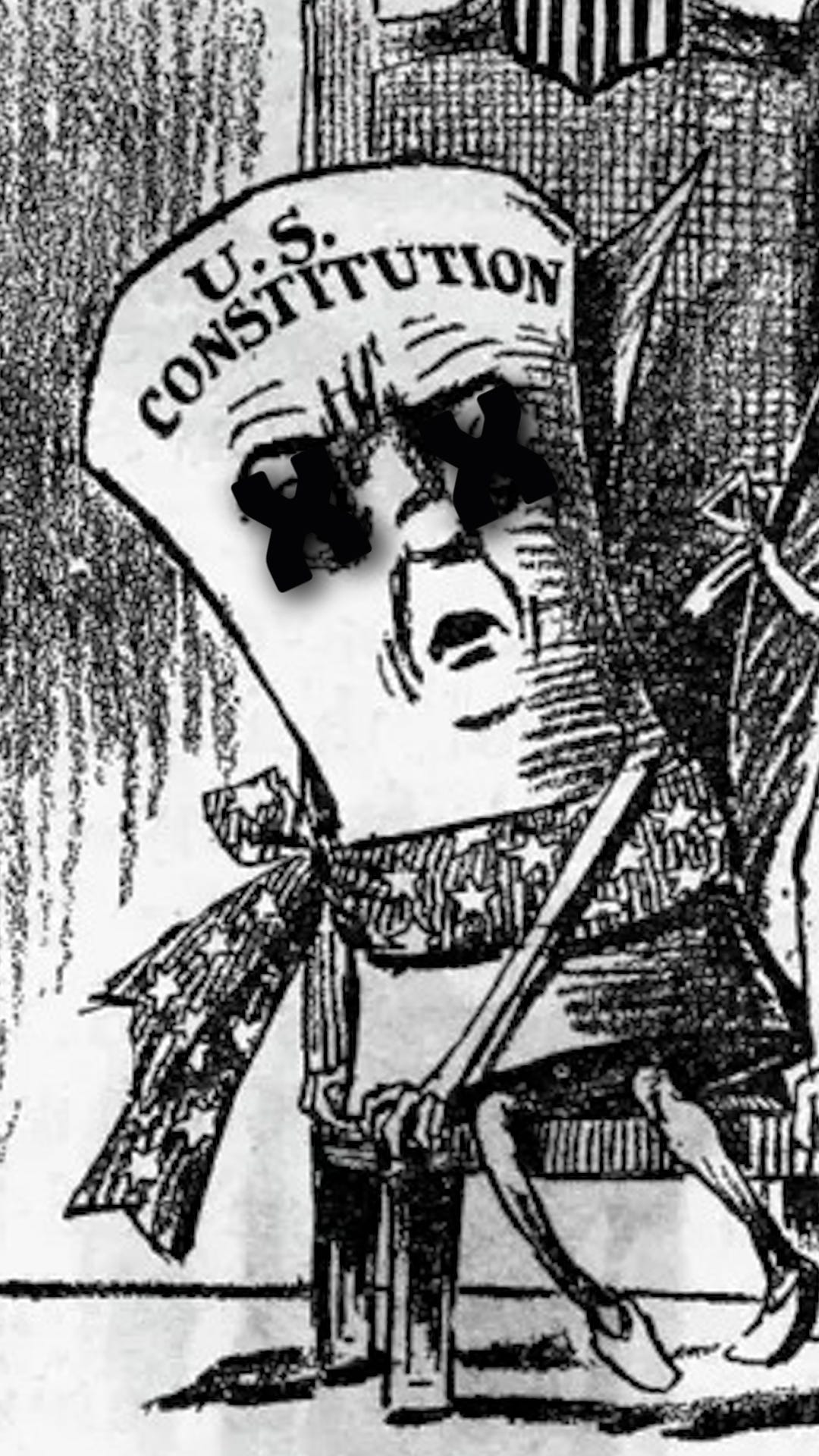
The U.S. Constitution is dead. President Trump put the final bullet in its brain.
When people say that American democracy is in decline they will frequently point out that Donald Trump is a symptom not the cause. True enough. The decline of the American political system was happening long before Trump won in 2016. You won’t find me disagreeing with that.
However, President Trump is bestowing the American system its final coup de grace. How? By exposing the Constitution’s ultimate dependency on “good faith.” And at this point there is no turning back.

Good faith is a legal concept that relies on an obligation to act honestly and fairly. As law professor David E. Pozen says, good faith “is said to supply the fundamental principle of every legal system.” There is a core presumption in the Constitution that the president shouldn’t lie or cheat. Presidents lie and cheat all the time of course. This is part of the reason why our system has been degrading for so long... our constitution depends on the honor system.
Legal scholar Andrew McCanse Wright writes, “The Constitution erects structural constraints (e.g., separation of powers and judicial review) and procedural enforcement mechanisms (e.g., impeachment) to constrain the presidency. But the first line of defense in a system of self-government is the President’s regulation of himself. That requires submission to the Take Care Clause and Oath of Office obligations. Personal character is an ingredient, but presidential self regulation is also a function of the broader institutional and cultural environment.”
Wright continues, quoting the Constitution’s explicit good faith obligations, outlined more than once: “The President must ‘take [c]are that the [l]aws be faithfully executed’ and must swear or affirm to “faithfully execute the Office of President of the United States” and ‘to the best of [his or her] [a]bility, preserve, protect and defend’ the Constitution. Therefore, the President has an explicit obligation of good faith and fair dealing with respect to the duties of the office and the execution of the laws.”
The problem is that if a president should discard honesty and fairness, our entire constitutional edifice starts to disintegrate. You might recognize this happening from the headlines you see in the news every day.
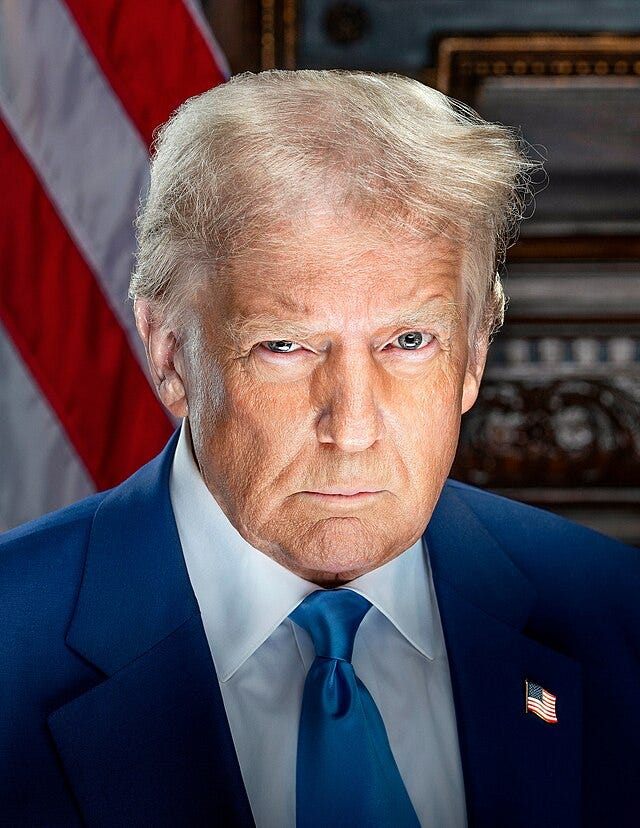
As columnist John Krull writes, “If [presidents] don’t demonstrate good faith—if they don’t honor their oaths and do their duty—so many things begin to fall apart. The proper functioning of a self-governing society. Government itself. And the rule of law.”
When it comes down to it there’s an awful lot riding on the honor system.
Just for contrast, what does bad faith look like? David Pozen writes “legal bad faith seems to involve opportunism. Opportunism occurs when there is ‘self-interest seeking with guile’ or, more generally, behavior ‘that would be contracted away if ex ante transaction costs were lower’ and that ‘[n]ot coincidentally . . . often violates moral norms.’” Opportunism? Lying for personal benefit? Violating moral norms? These words describe the Trump Administration perfectly.
As mentioned by Andrew McCanse Wright, there are structural constraints like the separation of powers, judicial review, and impeachment. The framers weren’t total goofballs, they had some idea that not every American president would be an angel. They put those backstops in there so we could stop the Chief Executive from breaking bad.
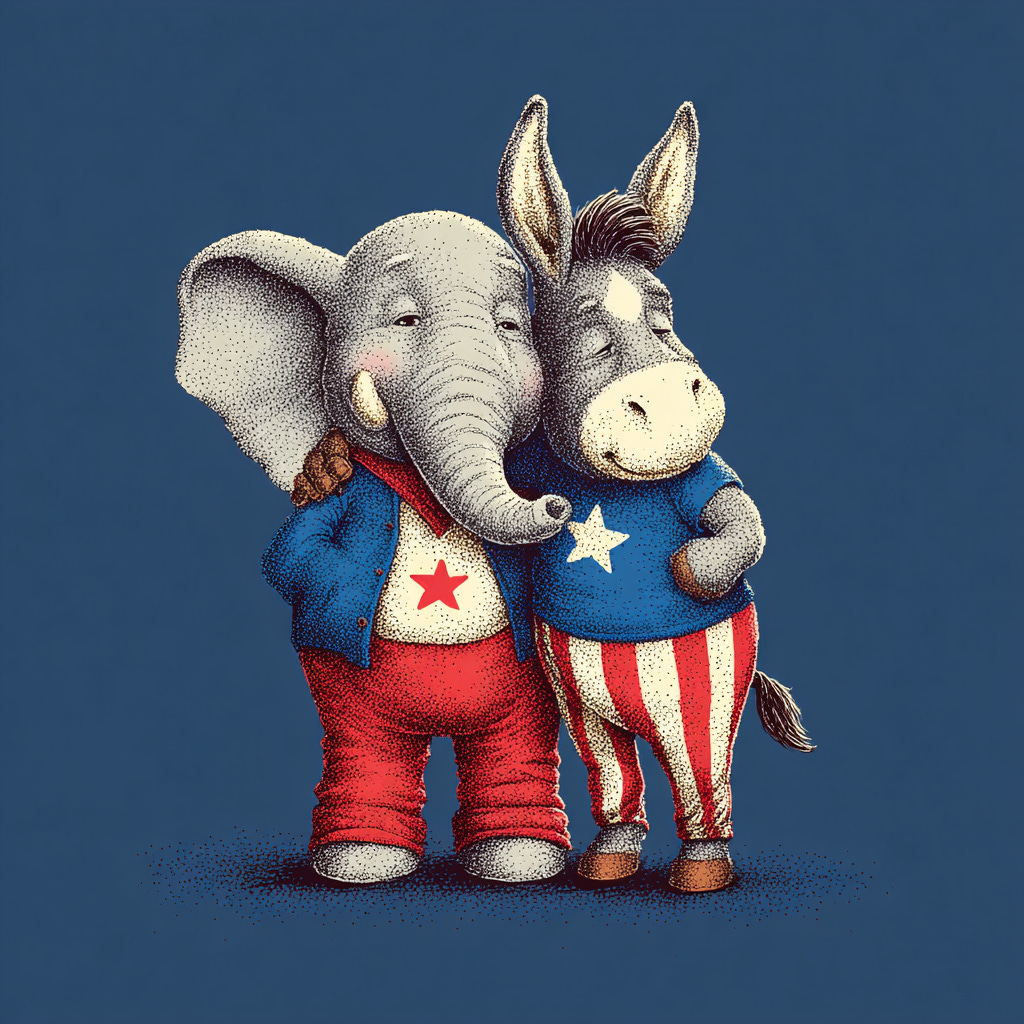
The problem is that all of those structural constraints have been disabled by the modern two-party system. Ideas about placing the wellbeing of the nation before party have long since gone out of fashion. Separation of powers and impeachment mean nothing when the president and the Congress are from the same party. The days of Republicans telling Nixon they wouldn’t back him if he were impeached are ancient history. Today, as long as the president and the Congress are from the same party impeachment and oversight are basically off the table. This applies to both major parties, of course.
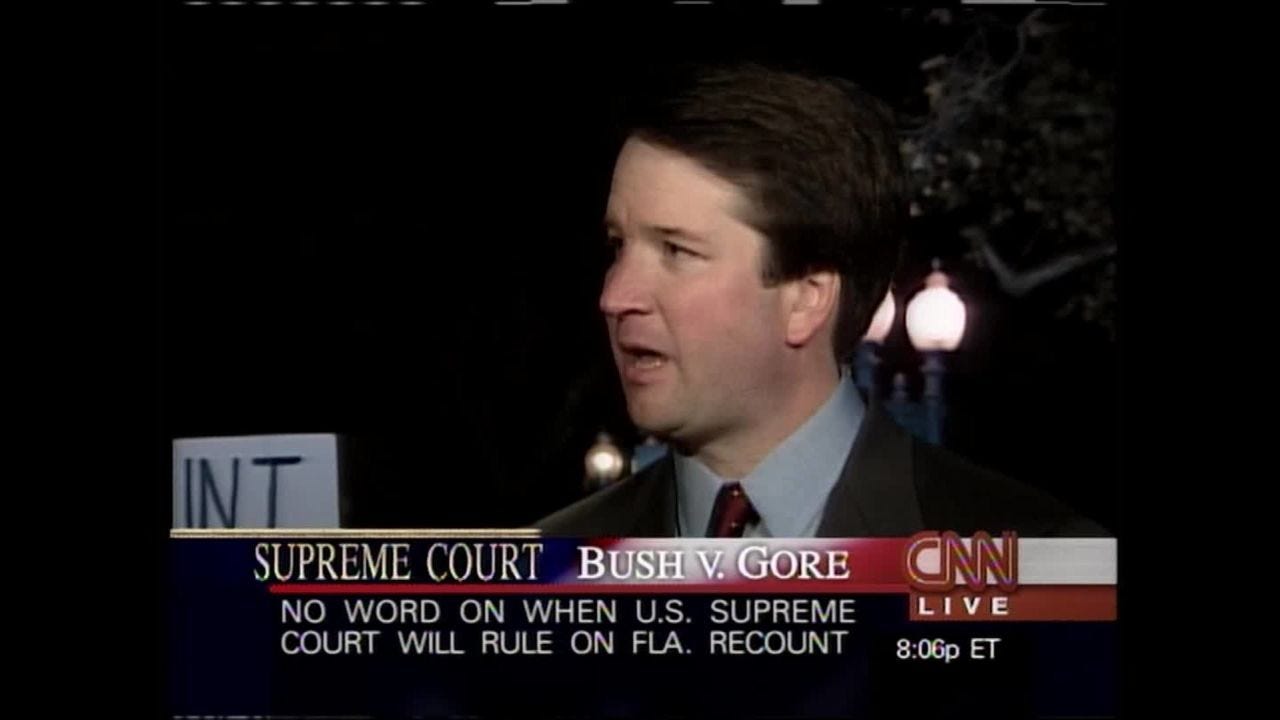
Judicial review also means nothing when one-third of current Supreme Court justices were appointed by the current president. Two of those three plus our Chief Justice John Roberts made up the legal team that successfully stole the presidency for team GOP back in the Bush v. Gore legal case of 2000. Supreme Court justices are supposed to be above the grubby Democrat/Republican rivalries that dominate the rest of DC, but they have proven they are not.
Many Americans are still hoping, in vain, that the Supreme Court will come to its senses and constrain President Trump’s power grabs and unlawful actions. They will not.
Lower courts, circuit courts, appeals courts ruled against Trump Administration actions hundreds of times in 2025. The New York Times notes some creative synonyms for bad faith, writing, “lower court judges appointed by presidents of both parties have noted, the administration’s actions have been ‘egregious,’ ‘capricious,’ ‘nonsensical,’ ‘unconscionable,’ ‘baseless,’ ‘cringe-worthy,’ ‘Kafkaesque,’ ‘blatantly unconstitutional’ and ‘a sham.’... Yet the Supreme Court remains blithely credulous of the administration.”
The Supreme Court also keeps finding in the administration’s favor.
One of the most common ways they are doing that is through the “shadow docket.” As the Brennan Center for Justice describes, the shadow docket, once used rarely for emergency decisions, has expanded dramatically. In just its first 20 weeks, the Trump administration made as many shadow docket applications, 19, as the Biden administration made during its entire 4 years. Barack Obama and George W. Bush only made a combined 8 shadow docket requests during their 16 years in office.
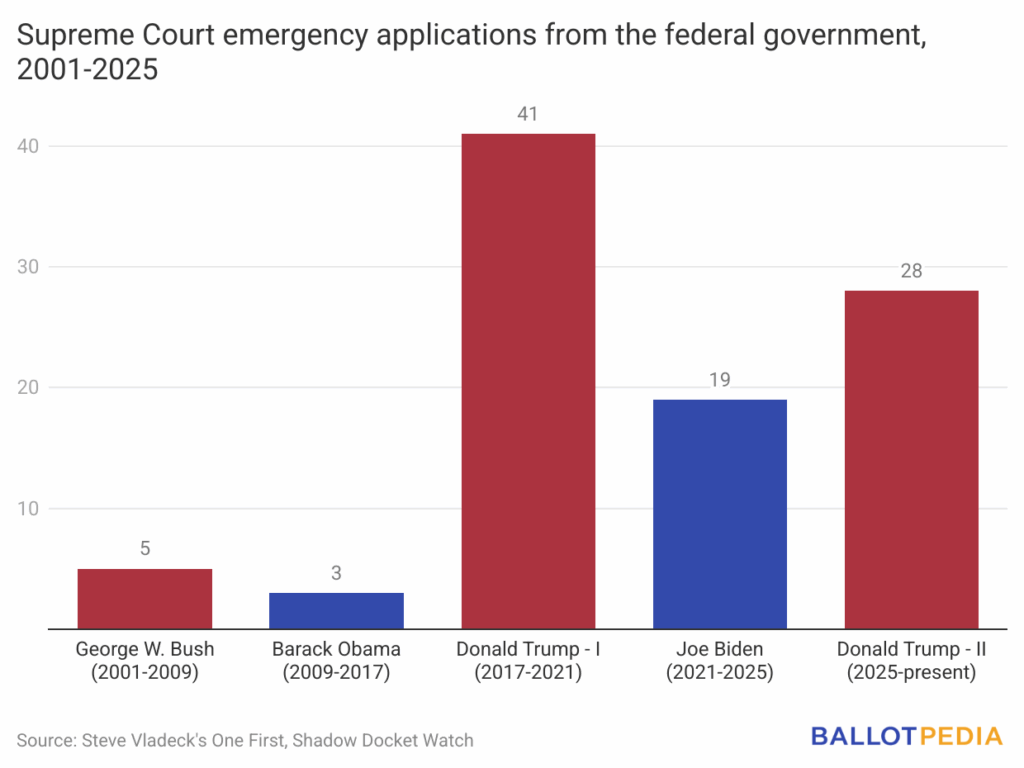
President Trump is now up to 32 emergency applications, the vast majority of which have been granted. As the Brennan Center for Justice writes, “A clear pattern has emerged: The Court is using the shadow docket to quickly and dramatically expand executive power.”
Yale law professor William Eskridge Jr. agrees writing, “The new shadow docket has made clear that the Roberts Court is aligning the judiciary with a coercive, sometimes violent government—and it is doing so with none of the justifications that must accompany a judicial ratification of presidential efforts to silence critics, cleanse the body politic, and upend lawful statutory regimes.”
The Christian Science Monitor quotes constitutional law associate professor Dan Farbman, who says “The court is terrified of having a head-on confrontation with the executive branch and making an order that the president won’t follow.” The Kilmar Abrego Garcia case shows a Trump administration that is already ignoring orders from the Supreme Court. Law professor Aziz Huq completes the thought saying, “A world in which the executive threatens something and the court accedes regardless of the legality of the thing in question is just as bad as a world in which the executive doesn’t obey court orders.”
Now the administration is taking aim at the 14th Amendment’s citizenship clause. Should a compliant Supreme Court find loopholes in the clear language of that text, which part of the Constitution will fall next? Could free speech be far behind?
It’s getting so bad that even conservative Supreme Court justices are starting to notice. During oral arguments in a case involving tariffs in November, Justice Neil Gorsuch seemed troubled. As the Trump administration argued for unilateral emergency powers, Gorsuch wondered aloud, “What president’s ever going to give that power back?”
And this my point. Now that President Trump has showed the American political class that it’s safe to dump old-fashioned notions about good faith, honesty or fairness, how are we ever going to get it back? It’s done. You can’t base your constitution on the honor system. Trump proves it. The Constitution is dead, we just haven’t realized it yet.
Bad faith killed the constitution. It’s time for a new one.
Please give a like, comment, restack, and share to help other people find my Substack.
Let’s make them pay.